Could You Be the Biggest Obstacle to Your Own Success?
TL;DR
Perfectionism, while seemingly a valuable trait, can often hinder success. Striving for flawlessness drains time, energy, and dreams, as perfection is an unattainable goal. Recognizing when to stop is critical.
Perfectionism manifests in two key ways:
1. “I Can’t Deliver Unless It’s Perfect” Type
These individuals believe everything must be flawless before delivering a project. No matter how much time passes, there’s always one more detail to improve. Common thoughts include:
- “The report’s charts need more detail.”
- “The presentation will be incomplete without this table.”
- “I can’t launch the product without this feature.”
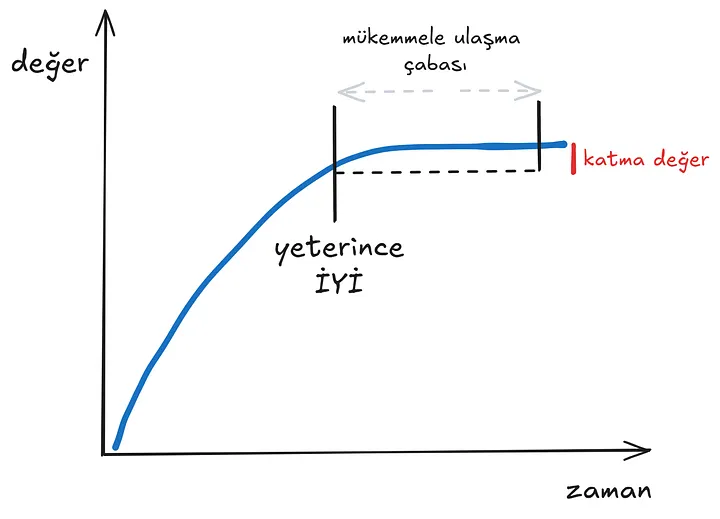
However, like adding too much sauce to a pizza, overdoing it ruins the essence. The Pareto Principle suggests 80% of the work generates most of the value, while the remaining 20% requires disproportionate effort.
A completed average project is more valuable than an incomplete perfect one.
2. “I Can’t Start Without a Perfect Plan” Type
This type spends excessive time polishing tools and memorizing every detail of the map before taking action. They think:
- “I can’t launch this campaign without analyzing all the data.”
- “If the plan isn’t perfect, execution will be chaotic.”
- “When I release my product, no one should find any flaws.”

Reality, however, is unpredictable. Even with thorough planning, some insights are irrelevant in practice. Waiting for the perfect time to start only delays action.
LinkedIn founder Reid Hoffman wisely said:
“If you’re not embarrassed by the first version of your product, you’ve launched too late.”
Plans are just sketches; the actual path unfolds along the way.
How to Overcome This?
- Adopt the 80% Rule: Deliver tasks once they’re 80% complete. Avoid wasting endless time on details that may never be finalized.
- Embrace Trial and Error: Start even without a perfect plan. Mistakes are part of growth.
- Prioritize: Identify what’s truly critical and let go of less important tasks, at least temporarily.
“You don’t have to be perfect to start, but you have to start to be perfect.”